

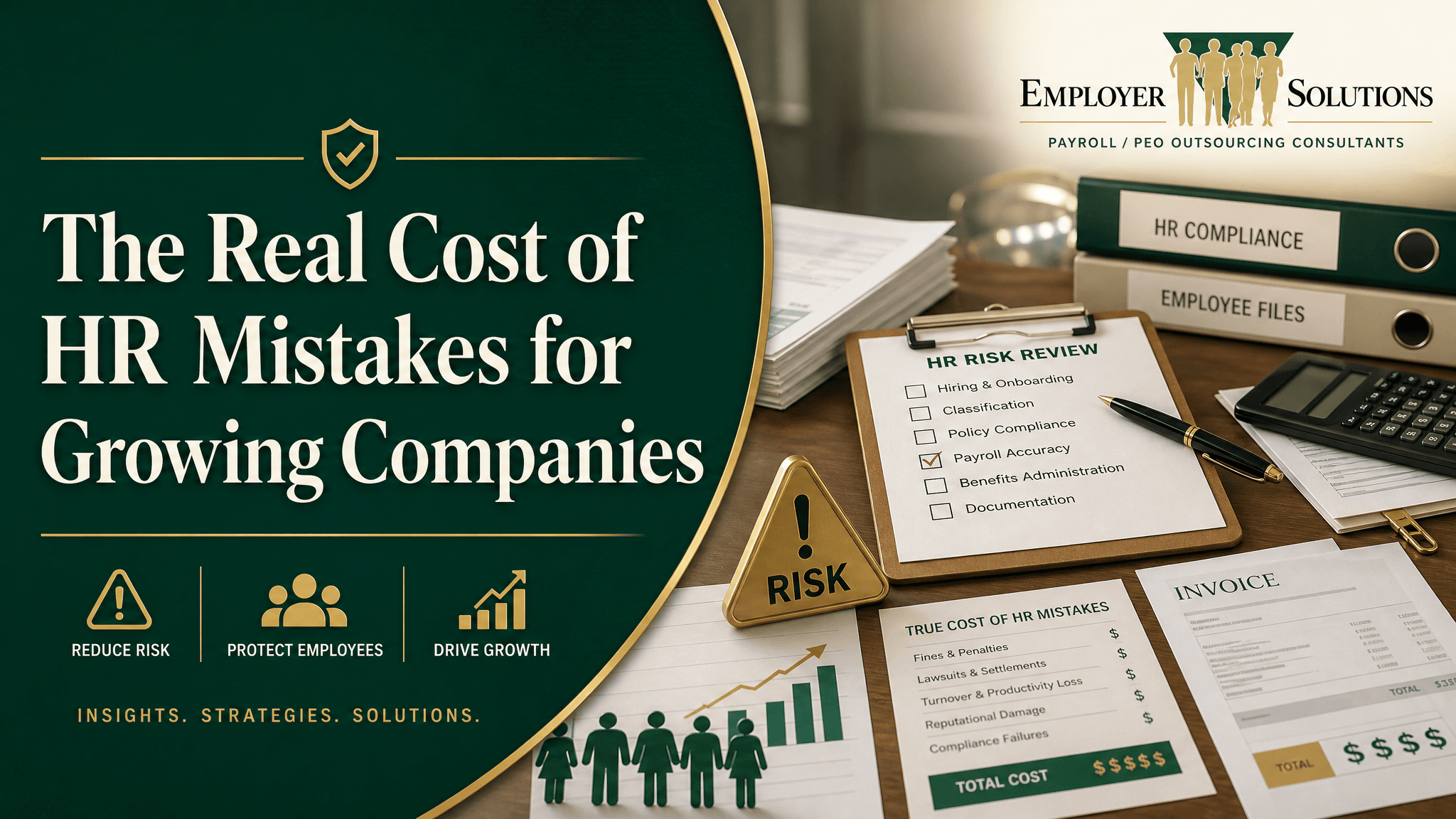
The Real Cost of HR Mistakes for Growing Companies
HR mistakes are rarely expensive in the moment they happen. They feel small first: a missing form, a wrong deduction, an outdated policy, a payroll correction, a manager who handles one situation differently from another.
The problem is what happens next. Small HR errors do not stay small for long when a company is growing.
The invoice is only the first line item
A lot of businesses count the visible cost and miss the rest. The direct cost might be a payroll rerun, a tax amendment, a compliance fix, or an outside review. But the indirect cost often ends up larger.
That hidden layer includes:
- manager time spent cleaning up the issue
- employee frustration and follow-up questions
- delay in other work because leadership is distracted
- inconsistent treatment that creates more confusion later
- added legal, accounting, or advisory time
In other words, the mistake is never just the mistake.
Growth makes inconsistency more expensive
A company with a handful of employees can sometimes survive a messy process because everyone knows everyone else. Once headcount starts rising, inconsistency becomes much harder to absorb.
If onboarding changes from one manager to the next, if payroll approvals are handled differently across departments, or if policy exceptions are made casually, the business starts collecting risk in pieces.
The larger the team, the more those pieces matter.
Payroll errors damage trust fast
People expect a paycheck to be right. When it is not, the reaction is immediate.
Even a small payroll issue can trigger:
- corrected pay runs
- employee complaints
- tax or deduction fixes
- extra communication from managers or HR
- a loss of confidence in leadership
That trust hit can linger long after the accounting is repaired. Employees remember whether payroll feels dependable.
Compliance gaps compound quietly
Some HR mistakes are obvious. Others sit in the background until an audit, claim, or dispute forces a review.
Common examples include:
- misclassified workers
- missing handbook acknowledgments
- inconsistent overtime tracking
- weak leave documentation
- incomplete personnel files
- outdated job descriptions
Each issue may seem manageable alone. Together, they raise the cost of every future correction.
Bad onboarding creates a long tail of cleanup
Onboarding is often treated as paperwork, but it is really the first operating system for the employee experience.
If new hires do not understand pay schedules, benefits, timekeeping, who approves what, or how to ask questions, the business pays for that confusion later. Managers get more interruptions. HR gets more one-off fixes. Employees start their jobs with uncertainty instead of clarity.
That is an expensive way to begin a working relationship.
Turnover is often an HR problem in disguise
When employees leave, leaders usually blame compensation, market conditions, or workload. Sometimes that is true. But HR mistakes can quietly push people out too.
Repeated payroll issues, unclear policies, confusing onboarding, and inconsistent treatment all lower confidence. Once that happens, retention gets harder.
And replacement is never just recruiting. It is recruiting, training, lost productivity, and manager attention that could have gone elsewhere.
The biggest hidden cost is attention
For owners and operators, the most expensive HR mistake may be the time it steals.
Every avoidable issue pulls leadership away from customers, revenue, and operations. That is why companies can feel busier without actually moving faster. Their best people are spending time fixing administrative friction instead of growing the business.
This is also why HR problems tend to repeat. If the process is weak, the same mistake comes back in a new form.
Where to start fixing the leak
You do not need to solve everything at once. Start with the controls that protect the most common failure points:
- Standardize onboarding documents.
- Review payroll and classification practices.
- Update handbook language and acknowledgments.
- Tighten manager approval steps.
- Make sure employee records are complete and easy to find.
Those five moves do not eliminate every HR issue, but they make the business much harder to surprise.
A better system lowers the bill
Growing companies usually need three things: clear rules, reliable process, and a place to get answers when a case does not fit neatly into the template.
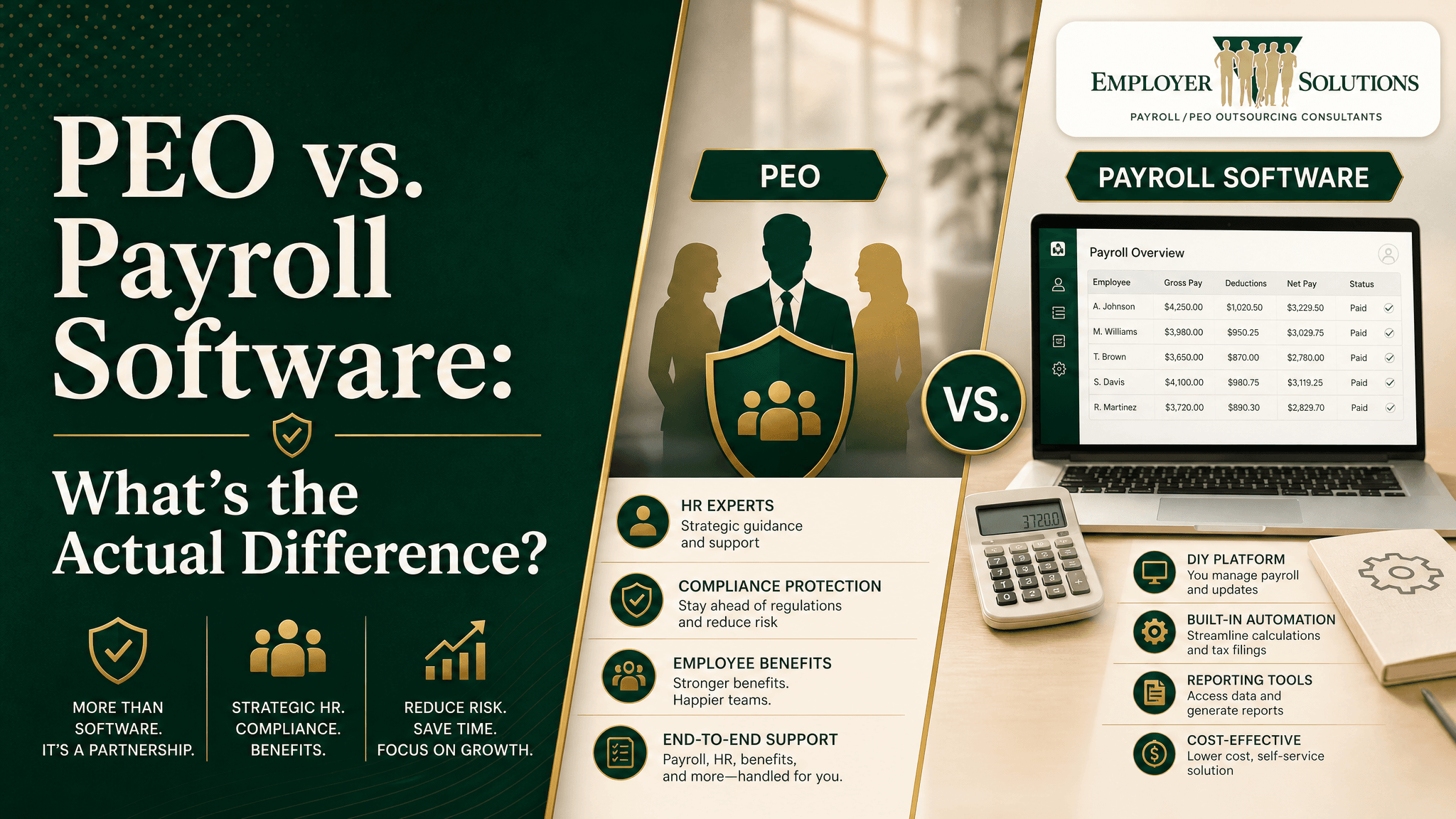
That support can come from internal staff, outside counsel, an advisor, or a PEO. The point is not the label. The point is to replace guesswork with something repeatable.
What the real cost looks like over time
The true price of HR mistakes is not the one correction you can see. It is the stack of small losses that come after it: delays, rework, confusion, turnover, and distraction.
If HR is constantly in repair mode, growth gets taxed by friction. If the process is solid, the business gets to spend its energy on the work that actually moves the company forward.
Employer Solutions PEO can help you reduce that friction with stronger payroll, onboarding, and compliance support.




Leave A Comment