

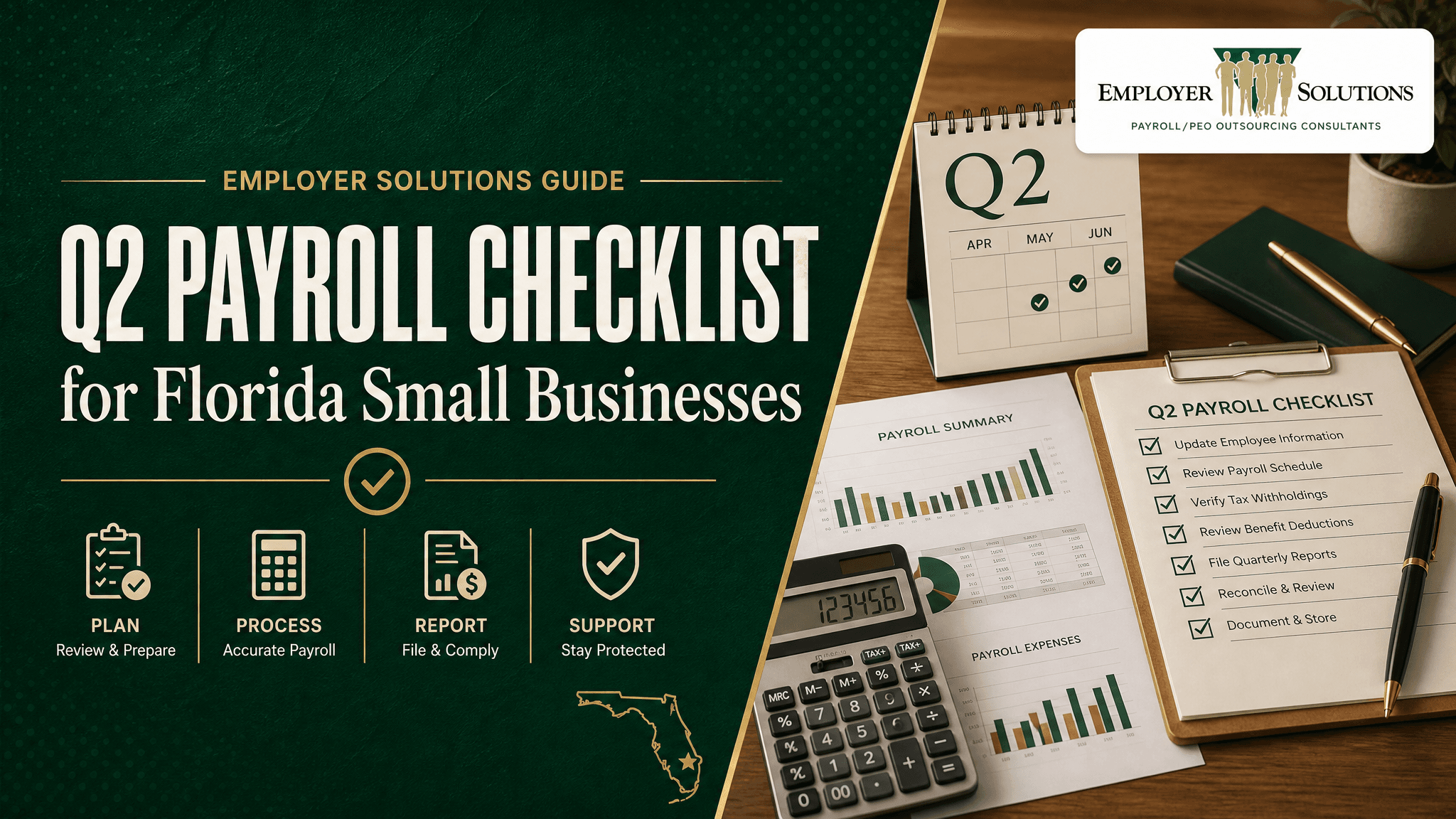
Q2 Payroll Checklist for Florida Small Businesses
Q2 is where payroll problems stop being theoretical. By the time spring is underway, the quarter is already telling you whether your records, approvals, and filing habits are solid or fragile.
For Florida small businesses, that matters even more because there is no state income tax to slow the conversation down. The real work lives in federal payroll taxes, unemployment reporting, employee records, benefits deductions, and any multi-state or seasonal complexity you are carrying.
Why Q2 is a useful checkpoint
Quarter-end is not just about filing. It is a chance to catch issues before they roll forward.
A clean Q2 review can uncover:
- bad time entries
- missing new-hire paperwork
- stale withholding or address data
- incorrect benefit deductions
- overtime errors
- contractor records that need a refresh
- payroll deposits that do not match the report trail
If those items are still open when Q3 starts, they tend to get more annoying, not less.
The checklist that should happen before quarter-end
1. Reconcile payroll to the general ledger
Start with the numbers that should agree with each other. Payroll registers, tax filings, benefit deductions, and accounting entries should all tell the same story.
If they do not, find out why now. The longer the difference sits, the harder it is to explain later.
2. Review employee data for anything stale
This is a good time to check:
- home addresses
- tax withholding forms
- direct deposit details
- job titles and departments
- pay rates
- manager assignments
Employee data changes quietly, and old records are one of the easiest ways to create filing errors.
3. Audit timekeeping and overtime treatment
If your business uses hourly workers, this step matters a lot.
Look for:
- missed punches
- approved edits that were never documented
- overtime paid differently from policy
- meal or break issues that were handled inconsistently
- employees using different time rules in different locations
The goal is not perfection. The goal is consistency.
4. Clean up new hires and exits
Every quarter should end with a clean roster.
Make sure you have complete files for anyone hired in Q2, and confirm that terminated employees were removed from active payroll, benefits, and access lists on time.
A lot of payroll noise comes from employees who are still appearing in one system after they should have been closed out.
5. Review deductions and benefit changes
Benefit changes often create small payroll errors that keep repeating.
Check whether premiums, garnishments, retirement contributions, or other deductions were entered correctly and updated when employees changed coverage or status.
A single typo can show up in several pay periods if nobody catches it early.
6. Verify contractor files
Florida small businesses that use contractors should not treat that as a once-a-year task.
Make sure contractor records include current agreements, invoices, tax forms, and any documentation needed to support the relationship. If the setup has changed, review the classification again.
7. Save the documents you will wish you had later
Quarter-end is the time to keep the paperwork that becomes useful during a tax question or audit.
Save:
- payroll reports
- filing confirmations
- correction summaries
- employee notices
- deduction change records
- approvals for unusual items
The file folder is part of the control system.
Q2 is also a good time to prep for summer
For many Florida businesses, Q2 is when staffing pressure starts shifting toward summer demand. That makes payroll setup more than an accounting task.
If you expect more hiring, more overtime, or more schedule changes, use Q2 to make sure the process can handle it before the pace increases.
A simple 30-day closeout plan
If you want to keep this manageable, work the quarter in three passes:
- Review – compare reports, files, and deductions.
- Fix – correct obvious issues before the quarter closes.
- Document – keep the proof of what changed and when.
That sequence saves more time than scrambling after the filing is already done.
If you only fix one thing
Make the payroll reconciliation match the accounting records. That single step catches a surprising number of issues, from bad coding to stale deductions to deposits that were posted in the wrong place.
What “good” looks like
A good Q2 close does not mean there were no issues. It means the issues were found, corrected, and documented while they were still easy to handle.
If your payroll process can survive one quarter without drama, it is probably in decent shape. If it cannot, Q2 is the right moment to tighten the screws.
Employer Solutions PEO can help Florida small businesses review payroll, clean up records, and head into the next quarter with fewer surprises.






Leave A Comment