

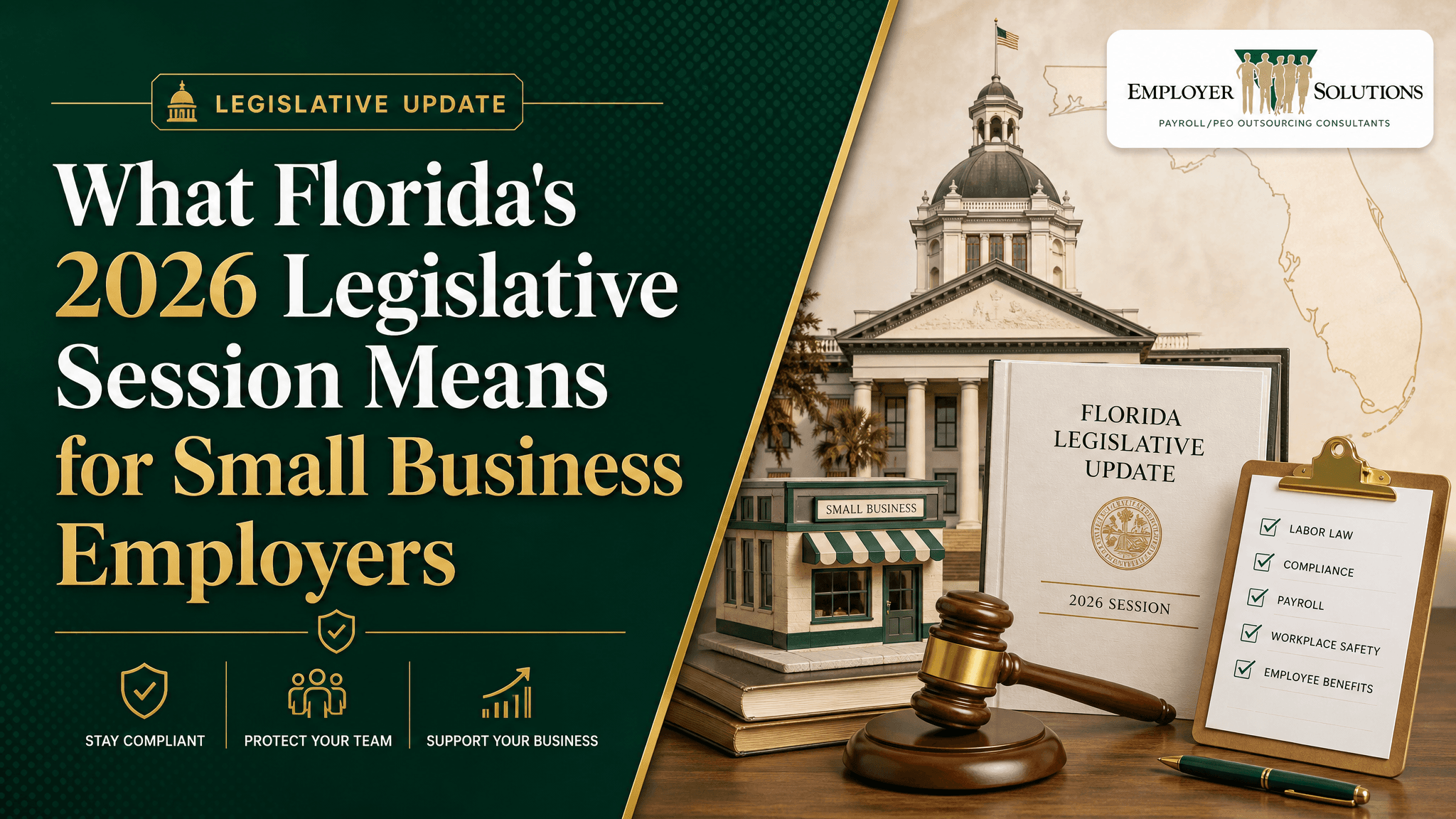
What Florida’s 2026 Legislative Session Means for Small Business Employers
Florida employers should treat legislative session headlines as a forecast, not a final answer.
That sounds obvious, but it is easy to miss when bill summaries make a proposal look like a coming rule change. For small businesses, the safest approach is to separate enacted law from bills that are still moving, because only the first one changes what you must do.
The important distinction: proposal vs. law
A bill summary can matter, but it is not the same thing as an effective statute.
That means employers should look at three questions before reacting:
- Is this just a proposal?
- Has it actually passed both chambers and been signed?
- If it becomes law, when does it take effect?
Until those answers are clear, it is smarter to monitor than to rewrite policy.
Employer-facing ideas that showed up in session tracking
During the 2026 session, the employer-related topics being tracked included several familiar categories:
- minimum wage carve-outs or waiver concepts for structured training or work-based learning
- broader E-Verify requirements for private employers
- tighter verification rules for reemployment assistance or unemployment claims
- leave policies that affect public employment discussions and may signal future private-sector debate
- possible labor standards enforcement changes
Some of those ideas are more disruptive than others, but the common thread is simple: they can affect hiring, onboarding, payroll, or handbook language if they become law.
What those proposals could mean in practice
If a minimum wage or training exemption concept ever advanced, employers would need to understand exactly who qualifies and what documentation is required.
If E-Verify expansion moved forward, onboarding and hiring workflows would need to be checked carefully.
If reemployment assistance verification rules changed, payroll and HR teams would need clean records and a process for responding to claims.
If a new enforcement structure appeared, businesses might need clearer policy language and better documentation habits.
The common theme is paperwork discipline.
What small businesses should do now
The best response is not panic. It is readiness.
A practical employer checklist looks like this:
- keep hiring files current
- review wage and hour basics
- make sure contractor classifications still make sense
- confirm handbook language is not stale
- keep payroll records and employee data clean
- stay in touch with your payroll or HR provider before a rule changes
Those habits reduce the amount of scrambling if a bill later becomes law.
Do not build on assumptions
One of the biggest mistakes small businesses make is reacting to a headline before they know the final text.
A proposal may change several times before it ends up dead, narrowed, or rewritten. That is why compliance work should be based on enacted language, effective dates, and agency guidance rather than on rumor or shorthand.
How to read legislative change responsibly
When a Florida employment bill matters, ask:
- What exactly changed in the final text?
- Who does it apply to?
- Is there a delayed effective date?
- Does the agency still need to issue guidance?
- Does this affect current payroll or only future hiring?
Those questions keep businesses from overreacting.
What this means for planning
For small employers, session season is a reminder to keep systems flexible.
If your payroll setup, employee handbook, and onboarding process are already clean, you can adapt faster when the law changes. If they are messy, every update becomes harder and more expensive.
What to watch next
If a Florida employment bill does move forward, the details will matter more than the headline. Small businesses should watch for effective dates, implementation guidance, and whether the change applies to every employer or only a narrower group.
That is especially important for payroll, because a rule can affect how workers are classified, what gets documented at hire, and which records need to be kept.
The takeaway for 2026
The message from Florida’s 2026 session is not “rewrite everything now.” It is “watch carefully, and be ready to move only when the law is real.”
That is the difference between cautious compliance and guesswork.
Employer Solutions PEO can help small businesses review Florida employment rules, watch for enacted changes, and prepare payroll and handbook updates without overreacting to proposals.


Leave A Comment